
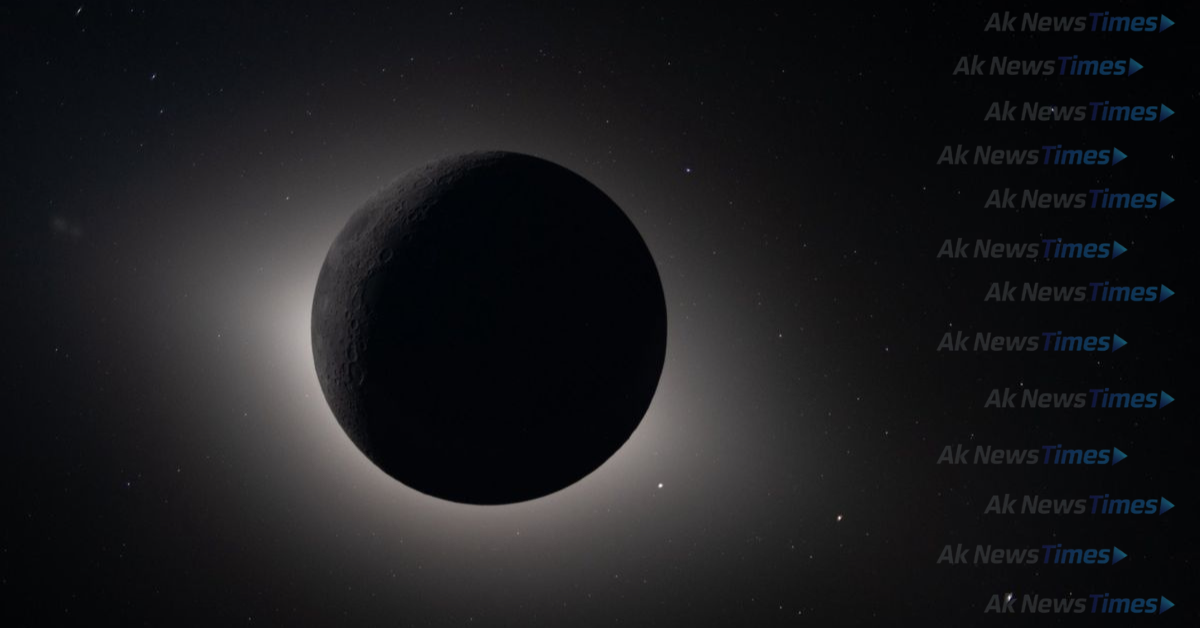
On the night of April 6, 2026, four astronauts aboard NASA’s Orion spacecraft experienced something no human being has witnessed in over five decades — a total solar eclipse, not from Earth, but from thousands of miles beyond the Moon’s far side. The Artemis 2 mission just delivered one of the most breathtaking moments in the history of human spaceflight, and the crew’s own words say it best.
“After all of the amazing things we saw earlier, we just went sci-fi,” said NASA astronaut Victor Glover, speaking live to Mission Control in Houston. “It just looks unreal… the Earthshine.”
Artemis 2 Solar Eclipse: What Exactly Happened Behind the Moon?
As the Orion spacecraft — named Integrity by its crew — completed its historic lunar flyby, it entered the shadow of the Moon at precisely 8:35 PM EDT on April 6, 2026. For the next 53 minutes, until 9:32 PM EDT, the Sun was completely blocked from the crew’s view by the Moon’s massive disc.
From Earth, a total solar eclipse lasts only a few minutes before the Moon moves out of alignment. But the Artemis 2 astronauts experienced totality for nearly a full hour — a rare solar eclipse duration that no human on Earth could ever witness. This is the first time astronauts have observed a solar eclipse from behind the Moon since the Apollo era in the early 1970s.
NASA astronauts Reid Wiseman, Victor Glover, Christina Koch, and Canadian Space Agency astronaut Jeremy Hansen were the four crew members who witnessed this jaw-dropping event from their Orion cabin windows.
What the Artemis 2 Astronauts Saw During the Rare Solar Eclipse
The 53-minute solar eclipse was far more than just darkness. Here is what the crew reported seeing:
The Solar Corona Up Close With the Sun’s blinding disc fully blocked by the Moon, the Artemis 2 crew had an unobstructed view of the solar corona — the Sun’s outermost atmosphere, which is normally invisible to the naked eye due to the Sun’s glare. Glover described the corona’s streamers as “baby hairs” peeking out from behind the lunar edge. “If you’ve ever seen the spotlight off the top of the Luxor in Las Vegas at night, this looks like what that wants to be when it grows up,” he said.
Earthshine on the Moon During the solar eclipse behind the Moon, the crew witnessed a stunning visual phenomenon called Earthshine — the glow of Earth’s reflected light illuminating the darkened lunar surface. “The Earth is so bright out there, and the Moon is just hanging in front of us, this black orb,” Glover told Mission Control. “Wow. It’s amazing.”
Planets and Stars Visible in Deep Space With the Sun blocked and surrounded by the deep blackness of space, the Artemis 2 astronauts were able to spot Venus, Mars, Saturn, and Mercury with their own eyes — something impossible from the surface of Earth during an eclipse.
Meteoroid Impact Flashes During the eclipse period, the crew reported witnessing at least five separate impact flashes on the darkened lunar surface — brief flashes of light created when small space rocks struck the Moon. These observations could help scientists better understand potential hazards for future lunar surface missions.
Artemis 2 Breaks All-Time Human Spaceflight Distance Record
The solar eclipse was the dramatic finale to an already historic day for the Artemis 2 mission. Earlier on April 6, at approximately 1:56 PM EDT, the Orion spacecraft surpassed the all-time record for the farthest distance any human being has ever traveled from Earth.
The crew reached a maximum distance of 252,756 miles from Earth — breaking the previous record of 248,655 miles set by the Apollo 13 crew in April 1970. This means Reid Wiseman, Victor Glover, Christina Koch, and Jeremy Hansen are now officially the four humans who have traveled farthest from our planet in all of history.
Acting NASA Associate Administrator Dr. Lori Glaze called the milestone historic. “They are charting new frontiers for all humanity,” she said. “Their mission is carrying our promise to return to the Moon’s surface, this time to stay, as we establish a Moon Base.”
First Crewed Lunar Flyby Since Apollo 17 in 1972
The Artemis 2 lunar flyby on April 6 marks the first time humans have flown around the Moon since Apollo 17 in December 1972 — a gap of more than 53 years. During the roughly seven-hour observation window, the crew photographed and verbally described approximately 35 geological features on the lunar surface, many of which have never been seen with human eyes.
The crew even provisionally named two craters visible from their spacecraft. One, named Integrity after their spacecraft, sits northwest of the Orientale basin. The second was named Carroll, in honour of mission commander Reid Wiseman’s late wife, Carroll Taylor Wiseman. Both names will be formally submitted to the International Astronomical Union for approval.
What Comes Next for Artemis 2?
With the lunar flyby complete, the Artemis 2 crew is now on their journey back to Earth. The Orion spacecraft is expected to splash down off the coast of San Diego, California, on Friday, April 10, 2026, at approximately 8:07 PM EDT. Recovery teams will retrieve the crew using helicopters and deliver them to the USS John P. Murtha for post-flight medical evaluations.
The data and observations collected during this mission — including imagery from the solar eclipse, corona observations, and meteoroid impact recordings — will directly support the planning of Artemis 3, which aims to land humans on the lunar surface as early as 2028.
Why the Artemis 2 Solar Eclipse Matters for Science
For solar scientists, the unique vantage point of the Artemis 2 crew during this solar eclipse is genuinely invaluable. Ground-based and orbiting spacecraft study the solar corona regularly, but human observers beyond the Moon — capable of verbal real-time descriptions and handheld high-resolution photography — provide a completely new type of data.
The crew also searched for zodiacal light (sunlight reflecting off interplanetary dust) and looked for lunar dust levitated off the Moon’s surface by electrostatic charge from solar radiation — a known hazard for future astronauts and equipment on the Moon’s surface.
Final Thought: A Moment That Belongs to All of Humanity
When Christina Koch emerged from behind the Moon after the communication blackout and spoke to Earth, she said: “We do not leave Earth – we choose it. We will explore. We will build ships. We will visit again.”
The Artemis 2 crew’s 53-minute solar eclipse behind the Moon was not just a scientific event. It was a reminder that human beings — when they dare to go farther than anyone has gone before — have a unique ability to look back and appreciate what they left behind.
Also Read : Putin’s India Visit 2025: Big Defence Deals, Energy Talks & What Modi Discussed With Russia
1 thought on “We Just Went Sci-Fi’: Artemis 2 Crew’s 53-Minute Solar Eclipse Behind the Moon Stuns the World”